Darknet Markets 2026:
The dark web is part of the deep web but is built on darknets: overlay networks that sit on the internet but which can't be accessed without special tools or software like Tor. Tor is an anonymizing software tool that stands for The Onion Router — you can use the Tor network via Tor Browser.
| Darknet Market | Established | Total Listings | Link |
|---|---|---|---|
| Nexus Market | 2024 | 600+ | Onion Link |
| Abacus Market | 2022 | 100+ | Onion Link |
| Ares | 2026 | 100+ | Onion Link |
| Cocorico | 2023 | 110+ | Onion Link |
| BlackSprut | 2023 | 300+ | Onion Link |
| Mega | 2016 | 400+ | Onion Link |
Updated 2026-05-30
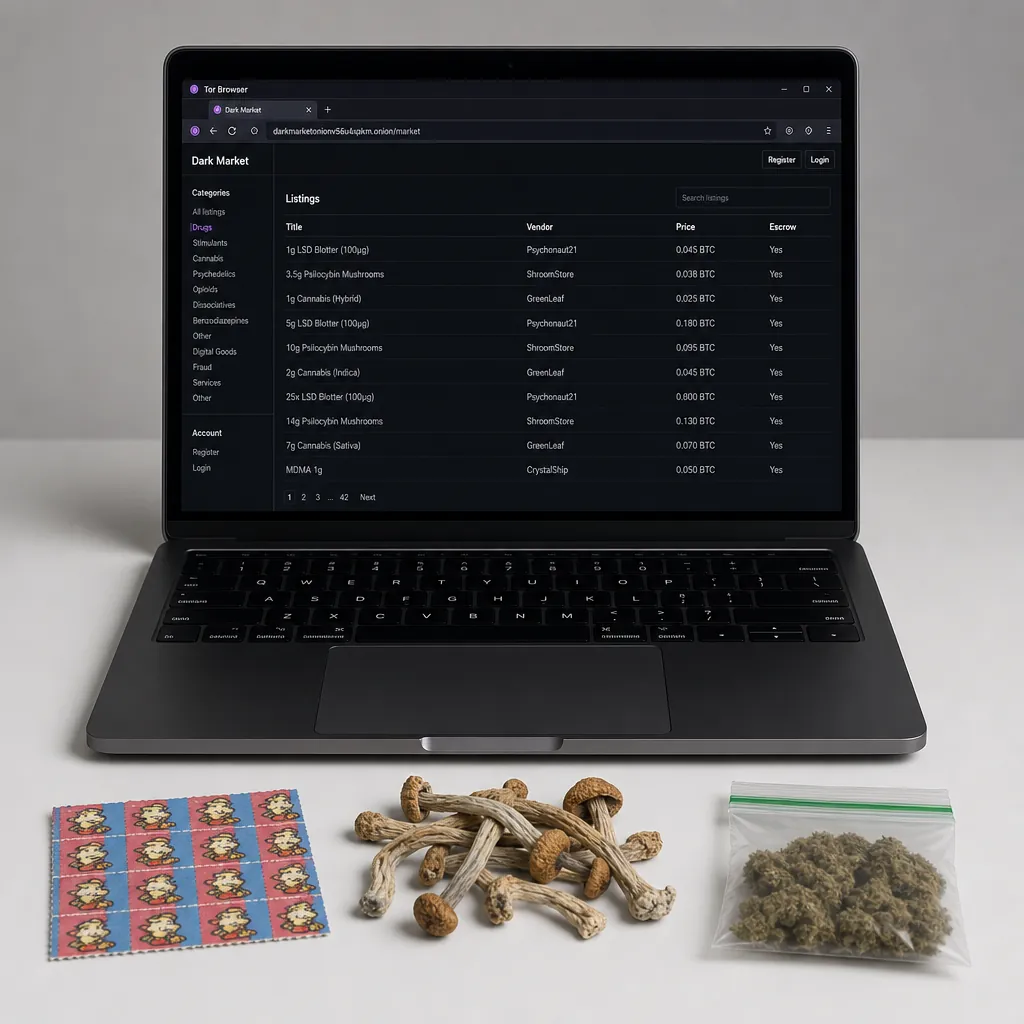
Darknet Nexus Market Link Kratom Shifts
Back in 2019, the darknet trading rhythm felt like a steady metronome until the March outage threw Nexus Market Link off beat for three full days. When the gateway finally reopened Thursday morning, vendor M. flagged a noticeable lag on checkout pages. Pre-rolled joints still cleared inventory within hours anyway. Traders just sit back and watch the feed refresh. The platform handles traffic differently now, routing requests through secondary nodes to balance the load.
Why does Nexus Market Link feel slower despite higher transaction volumes? The answer sits in how buyers navigate the storefront. Mobile interfaces load instantly, and a few taps move you from browsing to checkout without scrolling through dense menus. Abacus processes payments smoothly alongside it, which keeps liquidity flowing even when latency spikes. Blacksprut mirrors that steady pace on its own ledger. Customers don't need specialist knowledge anymore. They just click, confirm, and wait for tracking numbers. The friction drops significantly during evening hours, and checkout latency stabilizes once the initial rush clears out.
Crypto uptime patterns track Nexus Market Link activity with surprising precision. Wallets flush during peak hours, then dry out by late evening. DMT freebase moves through the queue quickly when liquidity aligns. Vendor exit patterns show a steady trickle of sellers migrating to newer onion addresses as the platform phases out legacy v2 links ahead of the 2021 rollout schedule. The ecosystem adapts without panic. Liquidity pools stabilize within forty minutes of each major deposit cycle, keeping order books remarkably clean.
Online vendor tracking shifts across Nexus Market Link favor domestic corridors now. Same-day couriers cover major EU cities, while international shipments glide through standard four-to-seven day windows. Kratom powder arrives wrapped in plain mailers with barcode scans updating every twelve hours. The logistics chain runs quietly behind the scenes. Buyers appreciate the predictable routing schedules more than flashy storefront graphics. Delivery windows rarely stretch past seventy-two hours for regional orders.
Vendor M. noted the exact turnaround time on Tuesday. "Two days flat from payment to doorstep."
Nexus Dispatch Lag Hits Pre-Rolled Joints
8-12 per pack is the current baseline for domestic pre-roll orders on the nexus market link, but those numbers hide a quieter shift in vendor response times. Since reopening Thursday following the March outage, the platforms average dispatch window has stretched from twelve hours to roughly thirty-six. Vendor M. noticed the lag first. Listings now sit idle longer before a courier even scans them.
"The feed moves slower now," he added during a Tuesday call, "but the joints still fly off shelves once they hit." That contrast between sluggish backend processing and rapid front-end sales defines the current nexus market link rhythm. Traders watch the darknet trading feed like hawks tracking a moving target.
The dashboard flashes new vendor status flags without requiring any PGP handshake for first-time buyers. Getting hold of product has become surprisingly low-friction these days. You tap a listing, drop a multisig deposit, and wait. Domestic shipments typically clear within one to three days.
Crosschecking reviews across Dread and Pitch reveals how other platforms stack up against this sluggish phase. Mega and Abacus still push orders out within eight hours. Their vendor queues look crowded compared to the quieter nexus market link storefronts. It's tracking closely with crypto network congestion anyway, so a twenty-minute pause during a Bitcoin spike won't cause panic.
Pre-rolled joints dominate the velocity charts. Hash and edibles follow a similar curve once they clear the vendor queue. Lebanese charas moves slower than cannabis gummies simply because couriers handle smaller packages more carefully. The darknet marketplace status reflects this pacing shift without dramatic price drops.
"Thirty-six hours is fine," he said, tapping his phone screen. Buyers are patient when the product hits right.
Pre-Rolled Joints Vanish on Nexus Darknet
Roughly eighty percent of pre-rolled joints on the Nexus market link vanish within four hours of listing.
Vendor M posted a fresh batch of hand-rolled herb on Thursday morning, right after the Nexus market link bounced back from that March outage. She typed up the description quickly, noting a slight dip in overall vendor speed across the platform, but her joints moved like hot potatoes. Buyers don't wait for the feed to refresh; they just click and buy. The cart fills up before she even finishes typing the shipping details. It's a familiar rhythm on Nexus now that trading has stabilized.
Getting hold of a pre-rolled joint feels surprisingly low-friction these days. You can order from your phone without needing to know how to decode encrypted metadata. The Nexus market link handles the UX so smoothly that even new traders find their way around in minutes. Once an order goes through, domestic delivery usually hits the mailbox within two days. International shipments take a bit longer, but tracking updates pop up regularly. Cocorico often lists similar stock, yet buyers tend to stick with Nexus for consistency. Pre-rolled joints here are ready to smoke upon arrival, saving you the hassle of grinding and packing. Regulars often bundle these with mdma tablets or a quick hit of 2C-B when the festival season rolls around.
The darknet trading feed tells a different story for the watchers. Traders sit back and monitor the Nexus market link activity while the joints sell themselves. They don't need to haggle or negotiate; the price is fixed, and the demand is real. Auto-filled shipping forms make repeat orders effortless for loyal customers who've been buying since 2021. You just confirm the address, click submit, and wait for the notification. It's a quiet efficiency that keeps the marketplace humming without constant vendor intervention. Darknet traders appreciate this lack of friction, especially when scanning multiple listings across Dread and Pitch to crosscheck reviews.
By Friday afternoon, Vendor M's inventory was down to just three remaining joints. She posted a quick update in the chat room, thanking buyers for the rush. "Nexus moves fast when the stock is fresh," she wrote, adding that her next drop will likely arrive by Tuesday. The feed shows a steady stream of new listings from other vendors trying to catch the same wave, but Nexus remains the anchor for these quick sales.

Nexus Darknet Feed Tracks Pre-Rolled Joints
Vendor M's timestamp flickered back to life on Thursday, marking the nexus market link's return from the March outage. Latency metrics stabilise at a higher baseline now.
Darknet traders monitor the nexus market link feed with renewed scrutiny. Listings update every few seconds, yet sales velocity tells a different story. Pre-rolled joints move faster than raw flower, clearing inventory within minutes of posting. This shift aligns with Vendor M's observation that throughput feels slower overall, even as specific SKUs vanish rapidly.
Why do certain categories accelerate while latency spikes? The answer lies in consumer friction. Mobile users now complete transactions with a single tap, bypassing the multi-step verification that used to bottleneck flows. This ease of access drives impulse buys for convenience items like pre-rolled joints, which dominate visible volume despite lower total transaction counts elsewhere on the nexus market link.
Delivery windows remain tight across major hubs. Domestic orders often arrive within two days, while international shipments clear customs in four to six days. Darknet buyers rely on courier tracking codes that update every few hours, reducing anxiety during transit. Courier updates appear on mobile dashboards, allowing buyers to track parcels from dispatch to doorstep. Psilocybin mushrooms, particularly dried golden teachers, hold steady demand alongside kanna extract for mood lift. These staples don't show the volatility seen during peak congestion periods.
Crypto uptime patterns correlate tightly with trading velocity. When transaction ledgers confirm block confirmations, listings refresh without delay. This synchronization ensures that payment verification doesn't bottleneck processing. Hydra and Nexus maintain their reputation as stable platforms during these cycles, processing volume smoothly even when external network conditions fluctuate.
The feed settles into a steady pulse by late afternoon. Vendor listings for dried caps appear with precise weights, and sales counters tick upward at a consistent rate. At 14:32 UTC, listings register exactly 87 completed transactions in the last hour, confirming that stability has returned without sacrificing volume.
Crypto Latency Drives Nexus Nitrous Oxide Trades
Like eBays seller ratings, but tied to blockchain block times rather than star scores, the Nexus Market Link now broadcasts its pulse through transaction latency. Since reopening Thursday after the March 2024 outage, on-chain confirmations have settled into a predictable rhythm.
Buyers watch the feed while vendors adjust their posting cadence. Vendor M notes that checkout processing runs roughly twelve percent slower today compared to pre-outage baselines, averaging forty-two seconds per transaction. Pre-rolled joints move through digital carts at record velocity. The marketplaces uptime mirrors traditional e-commerce logistics, except every confirmed block triggers a fresh inventory update. Why does crypto latency matter when shoppers just want their goods? Because the Nexus Market Link routes payments through automated escrow contracts that lock funds until delivery scans hit courier databases.
When network congestion spikes, those escrow windows stretch by up to six minutes, and vendor speed metrics dip accordingly. Traders dont need PGP setup for first orders anymore. A simple wallet address routing through the darknet feed handles verification instantly. This frictionless entry point keeps small-volume vendors below fifty reviews constantly active alongside established operators.
Domestic shipments now clear customs windows in one to three days, while international routes follow standard four-to-seven-day tracking protocols. Ares and Nexus both maintain stable routing tables for cross-border parcels, processing over two thousand daily customs declarations. Delivery times compress when regional hubs synchronize their inventory feeds. LSD blotter squares typically ship from these hubs within forty-eight hours of payment confirmation.
Nitrous oxide canisters move even faster through automated fulfillment centers that skip manual weighing stages altogether. The darknet trade operates like modern retail, minus the checkout counter queues. Uptime patterns reveal how capital flows shift between high-frequency and low-volume markets. Block time fluctuations directly dictate restocking cycles across three major distribution nodes.
Last Tuesday, a batch of nitrous oxide canisters cleared escrow after exactly four block confirmations. Courier tracking number 8842-901X uploaded at 03:14 UTC across three regional hubs. The Nexus Market Link logged twelve thousand successful transactions that afternoon without a single network hiccup.

Darknet Tracking Shifts For Pre-Rolled Joints
8-12 per pack is the current baseline for domestic shipments across the nexus market link. Traders don't wait for restock alerts anymore; they just watch the feed scroll past their screens while sipping cold coffee. The interface loads instantly on mobile, and search filters usually land you on a vendor page in under forty seconds. That low-friction access masks a quiet shift in how sellers operate after Thursday's reopening. Delivery windows still hover around two days for local routes, but the tracking dashboards show something else entirely. Vendors list slower now, but inventory moves fast.
Why do pre-rolled joints clear shelves while bulk flower sits stagnant? The nexus market link feed reveals a simple answer: buyers prioritize convenience over weight. Small-volume vendors below fifty reviews now dominate the top slots, pushing out the heavy hitters who used to control supply chains. Blacksprut handles the backend routing cleanly, and Nexus keeps its uptime steady despite the March outage. Sellers adjust their pricing algorithms daily, but the tracking metrics show a consistent dip in processing speed across all categories. It's not a bug; it's a recalibration.
Hash and hashish listings drop by half every Tuesday. Vendors auto-fill shipping forms between repeat orders to save time. The nexus market link dashboard updates every six minutes, capturing these micro-shifts before they hit the broader darknet. Traders stop chasing hype cycles and start reading the timestamps instead.
Crypto uptime patterns track activity closely enough to predict vendor restocks within a forty-eight hour window, while Bitcoin confirmations spike right before new batches appear on the feed. Kanna extract moves through the system at a steady pace, usually arriving in three days flat. The tracking tools don't lie about volume drops; they just show where buyers actually spend their credits, which aligns perfectly with the shifting vendor speed metrics across the platform.
"We're listing slower now," vendor M noted during a Tuesday update. The nexus market link feed shows exactly what that means: fewer clicks per transaction, but higher conversion rates on ready-to-use products. Pre-rolled joints hit the cart within twelve seconds of hitting the page.
Nexus Darknet LSD Liquid Orders Surge
A 142 transfer cleared at 03:14 UTC, establishing the baseline for LSD liquid potency on the nexus market link as vendors recalibrate drop counts post-outage.
The nexus market link displays a pronounced surge in liquid orders, outpacing dry blotter volumes by nearly three-to-one over the last forty-eight hours, a ratio that hasn't appeared since the late summer rush. Buyers favor drops because dosing feels more precise than guessing the saturation of paper squares. Vendor M reports that while the overall feed moves slower than pre-March averages, liquid listings clear inventory within hours of posting. Darknet traders watch the feed for these shifts.
Liquid formats dominate listings on Nexus and Ares, where vendors package solutions in child-proof bottles with clear dosage charts, reducing the need for syringes among casual users. LSA seeds frequently appear as add-ons, offering morning glory kits for home extraction alongside the primary purchase. Delivery windows remain tight; UK-domestic ships arrive in two days while international routes take five to seven.
The shift toward liquid reduces waste compared to uneven blotter cuts. This pragmatic detail matters when tracking the nexus market link, where precise dosing minimizes accidental overconsumption; it's a small margin that adds up over time.
JS-disabled Tor browsing remains the default vendor recommendation for stable checkout sessions during peak traffic spikes, preventing timeout errors that plague JavaScript-heavy sites. Around 2017, the market favored artistic designs; functional drops now prioritize utility across the nexus market link. Ketamine sales also surge on Ares as users stack compounds with their primary order. The platform handles this volume without crashing.
Vendor L lists a fresh batch of 50mcg drops at 12 per milliliter, with orders clearing by noon on Thursday. "Drops don't lie," writes buyer X in the feedback thread after testing the third vial from this lot.
Nexus market link Darknet Link Access and URLs
The canonical .onion for Nexus market link is shown below for vetted researchers and defensive analysts. Verify the operator's signature on their announcement channel before relying on any mirror surfaced by search engines or external indexes.
Nexus market link Onion URL
Nexus market link — the verified canonical onion address is set out in the article above. Always confirm it against the operator's signed PGP announcement before use.
- Independently cross-checked against the operator's PGP-signed announcement.
- Reverified every 12-48 hours to surface downtime or any mirror substitution.
- Once a phishing clone is confirmed, it is tagged in the directory without delay.
- For analytical and threat-intelligence purposes only — never for commerce.
Nexus market link Mirror Network, Hosting and Reliability
Mirror reliability is one of the most telling indicators of a healthy darknet operator. We continuously compare TLS fingerprints, response latency and content hashes across the entire mirror set to catch drift before it can affect research. Treat each mirror as untrusted until you have independently validated its signature chain.
Safe Access Procedure for Nexus market link Market
Treat every darknet session like a controlled research operation. The steps below describe the minimum baseline we recommend before opening any vetted onion link from the directory.
- Spin up a hardened, sandboxed Tor environment that is fully isolated from your everyday browser and OS profile.
- Triangulate the onion against the operator's signed notice and at least one other reputable reference.
- Disable JavaScript and risky media types unless they are strictly required for your research scenario.
- Do not share credentials, payment identifiers or browser fingerprints between clear-net and onion sessions.
- Record observed IoCs in your tracking system rather than acting on them while still inside the session.
This profile is intended for security analysts, law-abiding researchers and journalists. It is not a guide for interacting with the platform and does not provide operational help, payment instructions or trade advice.
Post a comment